States of Consciousness:
Psychedelic Discovery
and the Edge of Uncertainty
Oct 14-15, 2026
Clark Kerr Campus Conference Center
University of California, Berkeley

“Consciousness is felt uncertainty.”
– Mark solms, neuropsychologist
States of Consciousness is a multi-day conference exploring uncertainty in the study of consciousness through the lens of psychedelic science. Hosted by the UC Berkeley Center for the Science of Psychedelics, States of Consciousness brings together researchers and practitioners across neuroscience, philosophy, journalism, ethics, and Indigenous studies to examine how different disciplines and knowledge systems approach questions of mind, consciousness, and psychedelics.
The study of consciousness contains some of the most exciting and evolving questions of our time, and psychedelics provide a unique stress test for theories of consciousness. By stretching existing frameworks to their edges, these expanded states invite us to embrace uncertainty as a path to discovery and create space outside the models of the mind. The deeply subjective nature of experience presents unique challenges to approaches that center objective measurements and ways of knowing. This is where multidisciplinary approaches hold promise. Productive friction — the spaces where disciplines meet — is where the action in this conference will take place.
This conference does not assume or seek a single definition of consciousness. Instead it creates a meeting point for expansive new ways of thinking to explore the understanding of how one relates to themselves, each other, and the beyond.
Ticket sales for the States of Consciousness conference have reached full capacity. We are unable to accept further registrations at this time. Please email bcspevents@berkeley.edu if you’d like to be added to the waitlist.
In-person only; no livestream will be available
Call for interdisciplinary poster session
The BCSP invited conference attendees to submit poster abstracts for the interdisciplinary poster session.
The deadline has passed.
What to expect
Join 250 researchers, practitioners and scholars for dynamic discourse that moves beyond traditional lecture formats. Grounded in an ethos of co-creation and intellectual humility, this event features keynote speakers, panels, interactive break-outs, and interdisciplinary poster sessions. Across two days, and in alignment with the BCSP’s mission and values, participants will lean into uncertainty to:
- Facilitate Inquiry: Examine how psychedelics research informs and challenges contemporary understandings of the brain, mind, and nature of consciousness.
- Foster Generative Discovery: Leverage the productive friction between disciplines and worldviews to identify breakthrough questions and refine approaches to the study of consciousness.
- Strengthen Interdisciplinary Partnerships: Build and deepen the collaborative relationships necessary to advance psychedelics and consciousness research.
- Destigmatize Psychedelics and Consciousness Research: Confront stigmas of subjective experience and expanded states of consciousness (particularly those involving substances with complex legal histories) to overcome barriers that have hampered multidisciplinary research.
Speakers

Gül Dölen, Professor, UC Berkeley
Dr. Gül Dölen is a Professor in the Department of Psychology, the Renee & U.S. Marine LCpl Bob Parsons Endowed Chair in Psychology, Psychedelics, and Neuroscience, a senior science advisor to BCSP and a member of the Helen Wills Neuroscience Institute. She also maintains an Adjunct Professorship in Neuroscience and Neurology at the Johns Hopkins University, School of Medicine. Dölen is the recipient of several prestigious awards including: the Joukowsky Family Foundation Outstanding Dissertation Award, the Conquer Fragile X Rising Star Award, the Angus MacDonald Award for Excellence in Undergraduate Teaching, the Society for Social Neuroscience Early Career Award, the Searle Scholars Award, and the Johns Hopkins University President’s Frontier Award.

Geshe Tenzin Rinpoche, Teacher and Meditation Master
Geshe Tenzin Wangyal Rinpoche, founder and spiritual director of Ligmincha International,
is one of only a few masters of the Bön Dzogchen tradition presently living in the West. An
accomplished scholar in the Bön Buddhist textual traditions of philosophy, exegesis, and
debate, Tenzin Rinpoche completed a rigorous11-year course of traditional studies at the
Bönpo Monastic Center (Menri Monastery) in India, where he received his Geshe, degree. In
1992 Tenzin Rinpoche founded Ligmincha International in order to preserve and introduce
to the West the religious teachings and arts of the ancient Tibetan Bön Buddhist tradition.
Fluent in English, Rinpoche is known for his clear, lively, and insightful teaching style and
his ability to make Tibetan practices easily accessible to the Western student. He is a highly
respected and beloved teacher to students throughout the United States, Mexico, and
Europe. In addition to Ligmincha International’s affiliates in the United States, Rinpoche has
established centers in Central and South America, Europe and India.
Rinpoche is the author of 9 books: Wonders of the Natural Mind, in which he presents the view
and practice of the Bön Dzogchen teachings; and The Tibetan Yogas of Dream and Sleep; Healing
with Form, Energy, and Light: The Five Elements in Tibetan Shamanism, Tantra, and Dzogchen;
Unbounded Wholeness; Tibetan Sound Healing; Tibetan Yogas of Body, Speech and Mind; Awakening the
Sacred Body; Awakening the Luminous Mind; The True Source of Healing, and Spontaneous Creativity.

Cassandra Vieten, Clinical Professor, UC San Diego, Conference Advisor
Cassandra Vieten is Clinical Professor and Director of the Center for Mindfulness at the Centers for Integrative Health in the Department of Family Medicine at UC San Diego. She is also Director of Research at the Arthur C. Clarke Center for Human Imagination and Clinical Psychology Director at the Psychedelics and Health Research Initiative at UCSD. She is Senior Advisor of the John W. Brick Mental Health Foundation where she served as Executive Director from 2019-2023, and a Senior Fellow at the Institute of Noetic Sciences, where she served as President from 2013-2019.

Belinda Eriacho, Bridge Builder
Belinda Eriacho is a wisdom carrier, advocate, and bridge builder. She is of Diné (Navajo) and A:shiwi (Zuni Pueblo) descent, whose maternal clan is Honágháahnii (One-Who-Walks-Around) and who is born for the Naasht’ezhi (Zuni Pueblo people). Her maternal grandparents are from the Dibé łizhini (Black Sheep) clan, and her paternal grandparents are from the Parrot and Bear clans.Her ancestral wisdom and traditions form the foundation of her life’s work. Rooted in the values of her lineages — resilience, reciprocity, and collective care — Belinda carries forward the responsibility of her communities with deep reverence and purpose.
Grounded in these lineages, her work bridges Indigenous wisdom and knowledge systems with contemporary conversations about consciousness, healing, and sacred medicines. Her professional focus includes Indigenous knowledge systems, Hózhó (harmony and balance), intergenerational trauma and healing, cultural humility, sacred medicines and psychedelic care, reciprocity, community-centered healing, and bridging Indigenous knowledge with Western science.
Her lived experiences with sacred medicines are unique and help bridge understanding of opportunities for collaboration between ancient cultural knowledge and modernity.
She is the founder of Kaalogii LLC, focused on traditional cultural teachings and inner healing, and consults with Western institutions and programs to bring alternative perspectives. She is an international voice on issues affecting Native American communities across the United States and shares worldviews that broaden perspectives on healing and access. Her writing bridges cultural understanding and innerstanding; the health and intergenerational trauma of Native peoples; the intersection of modern science and ancestral knowledge systems; and the evolving role of entheogenic and psychedelic medicines in healing. She advises on psychedelic-assisted therapy programs and advocates for policy that centers Indigenous voices.
Belinda holds degrees in Health Sciences, Public Health, and Technology. Her community work includes serving as a co-founding board member of the Church of the Eagle and the Condor, a multicultural spiritual community based in Phoenix, Arizona, and collaborating with tribal professionals on healing our communities. She has received training in MDMA-Assisted Therapy, EMDR, and Ketamine-Assisted Therapy (KAT).
She is a contributing author to several books and articles, including “Considerations for Working with Indigenous People in Psychedelic Spaces & Guidelines for Inclusion of Indigenous People in Psychedelic Science
She holds degrees in Health Sciences, Public Health, and Technology.
Belinda is trained in MDMA-assisted therapy, ketamine-assisted therapy, and EMDR, serving as a bridge between ancestral healing and emerging mental-health modalities. She served on Colorado’s Natural Medicine Act, Federally Recognized American Tribes and Indigenous Communities Working Group. In addition, is the a co-founder and board member of the Church of the Eagle and the Condor.
Belinda’s work uplifts Indigenous knowledge, strengthens cultural safety, and advances ethical, community-rooted healing pathways. As an educator, advocate, and bridge builder, Belinda works at the intersection of culture, health, and community empowerment.

Manvir Singh, Assistant Professor, UC Davis
Manvir Singh is an assistant professor of anthropology at the University of California, Davis and the author of Shamanism: The Timeless Religion (2025). He holds a bachelor’s degree from Brown University and a PhD in human evolutionary biology from Harvard University. His research examines why human societies regularly develop strikingly similar complex cultural traditions, with a focus on music, myth, and shamanism. He has conducted long-term ethnographic research with Mentawai communities in Indonesia since 2014 and more recently has studied Indigenous psychedelic use in eastern Colombia. He is also a contributing writer to The New Yorker, where he covers history, evolution, and the human mind.

Alison Gopnik, Professor, UC Berkeley
Alison Gopnik is professor of psychology and affiliate professor of philosophy at the University of California at Berkeley, and a member of the Berkeley AI Research Group. She received her BA from McGill University and her PhD. from Oxford University. She is a leader in cognitive science, particularly the study of learning and development. She was a founder of the field of “theory of mind”, an originator of the “theory theory” of cognitive development, and the first to apply Bayesian computational models to children’s learning. She has received the APS Lifetime Achievement Cattell and William James Awards, the SRCD Lifetime Achievement Award, the APA Distinguished Scientific Contributions Award, the Bradford Washburn and Carl Sagan Awards for Science Communication, and the Rumelhart Prize for Theoretical Foundations of Cognitive Science. She is a member of the National Academy of Sciences and the American Academy of Arts and Sciences and a Cognitive Science Society, American Association for the Advancement of Science, and Guggenheim Fellow. She was 2022-23 President of the Association for Psychological Science. She has six grandchildren.
She is the author of over 160 journal articles and several books including the bestselling and critically acclaimed popular books “The Scientist in the Crib” 1999, “The Philosophical Baby” 2009, and “The Gardener and the Carpenter” 2016. She has written widely about cognitive science and psychology for The Wall Street Journal, The New York Times, The Economist, and The Atlantic, among others. Her TED talk has been viewed more than 5.7 million times. She has frequently appeared on TV, radio and podcasts including “The Colbert Report” and “The Ezra Klein Show”.

Sylvestre Quevedo, Formerly Associate Professor, UC San Francisco
Dr. Sylvestre Quevedo earned his undergraduate degree in biology with honors from the University of California, Berkeley. He received his MD from Harvard Medical School and an MPH from the Harvard School of Public Health. Trained in family and community medicine, internal medicine, nephrology, and public policy, Dr. Quevedo has held academic and clinical leadership roles at Stanford University, UCSF, Duke University, and UC Berkeley. He has directed dialysis and integrative medicine programs at Stanford and UCSF and served as Osher Foundation Professor of Medicine at UCSF. His work spans global health, medical education reform, and healthcare analytics. Dr. Quevedo has advised health IT startups and was Chief Medical Officer of HealthQx, later acquired by McKesson. He has led and participated in FDA-approved clinical trials in psychedelic-assisted therapies and continues to direct research in this area at the Open Mind Collective in San Francisco.
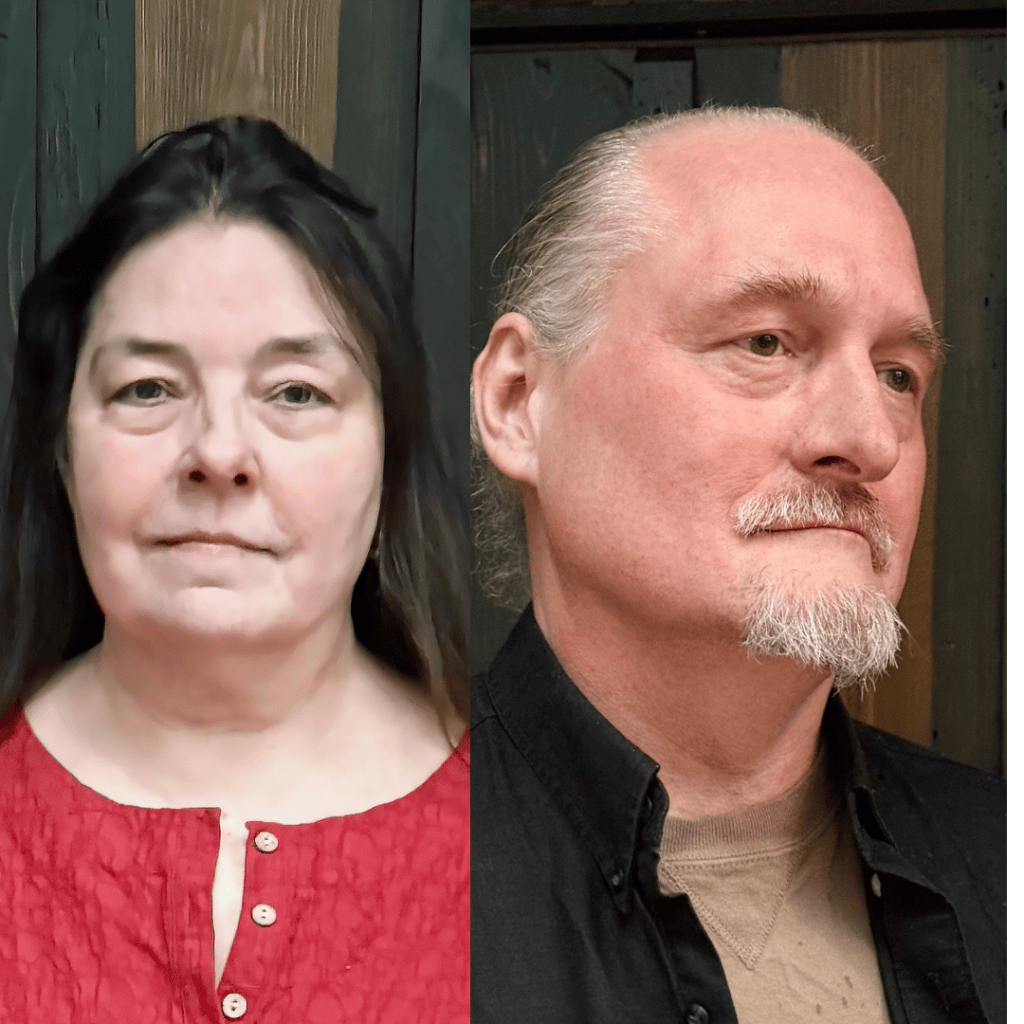
Fire Erowid and Earth Erowid, Co-founders of Erowid Center
Fire Erowid and Earth Erowid are the co-founders of Erowid Center, an IRS-approved 501(c)(3) non-profit educational organization that collects, reviews, and publishes data about psychoactive plants, drugs, technologies, and practices. They operate an online drug information library (Erowid.org), oversee the digital archiving of psychedelic history including the Shulgin Archive, Tim Scully Underground LSD Manufacturing History Project, and Stolaroff Collection, and direct a public lab-based drug checking service (DrugsData.org). Together they have spoken at a diverse array of conferences, have co-authored 21 peer-reviewed journal articles, and built a public archive of over 45,000 first-person experience reports of psychoactive drug use.

Fabrice Guerrier, Fine Artist, Worldbuilder, and Futurist
Born and raised in Port-au-Prince, Haiti, Fabrice Guerrier is a fine artist, writer, and futurist whose life and practice are driven by a fundamental conviction: that imagination is the greatest force and power we have to access. Guerrier earned a Bachelor of Science in International Relations at Florida State University, followed by a Master’s degree in Conflict Transformation and Peacebuilding from Eastern Mennonite University. His background includes working within key global and civic institutions—including the U.S. State Department, PEN America, and the United Nations, as well as serving as the youngest president of Coming to the Table, a national racial reconciliation organization in the U.S. This trajectory informs his wide-ranging global vision, nuanced perspective on systemic and cultural change, and deep commitment to human imagination.
Today based in Los Angeles, Guerrier’s multidisciplinary practice bridges fine art painting, drawing, literature, and speculative worldbuilding. Rooted in Afrofuturism, Haitian history, and Vodou cosmology, his work today actively investigates cultural revolution, societal decay, personal agency, and spiritual transformation. The author of over ten books, Guerrier writes regularly on Substack at Notes on Imagining the Future, has taught at the Esalen Institute in Big Sur, and lectures widely across academic and cultural institutions.
Over the last decade, he has built hundreds of imaginary, shared worlds through cross-national collaborations with authors, global experts, futurists, visual artists, and science fiction visionaries. Guerrier has been recognized on both the Forbes 30 Under 30 list and The Root 100 list of the most influential African Americans in the United States. In 2025, he was named “Alumnus of the Year” by Eastern Mennonite University. He is fluent in French and Haitian Kreyòl.

David Presti, Teaching Professor in Psychology and Neuroscience, Advisor, BCSP, Conference Advisor
David Presti has taught neurobiology and psychology at UC Berkeley for over 35 years, with the history, psychological value, and known neurobiology of psychedelics as important parts of his instructional curriculum. He has also worked to shift educational dialogue and public policy related to psychedelics. For more than a decade he worked in the clinical treatment of addiction and post-traumatic stress disorder at the San Francisco VA Medical Center. He also teaches neuroscience and converses about science with Buddhist monastics in India, Bhutan, and Nepal. David sees BCSP as poised to contribute innovative investigations related to psychedelics as probes of the nature of mind and to explore the nexus between physical science and spirituality.

Sandor Iron Rope
Sandor Iron Rope is an enrolled member of the Oglala Lakota Oyate from Pine Ridge, South Dakota, whose work centers on Indigenous sacred medicine protection, cultural continuity, and ethical leadership within conversations surrounding psychedelic research and policy. He received his B.A. in Human Services and American Indian Studies from Black Hills State University.
Mr. Iron Rope supports Tribes and Native American Church communities throughout the United States, Canada, and Mexico, serving as President of the Native American Church of South Dakota and former Chair of the Native American Church of North America. His leadership emphasizes the protection of Indigenous ceremonial practices, sovereignty, intergenerational knowledge transfer, and the long-term conservation of peyote as a sacred medicine.
Through his work, Mr. Iron Rope advocates for Indigenous-led approaches to sacred medicines and contributes to broader discussions surrounding mental wellness, healing, conservation, and the evolving psychedelic landscape. His perspective calls for ethical collaboration rooted in Indigenous knowledge systems, respect for ceremonial responsibility, and the protection of sacred medicines for future generations.

Boris Heifets, Associate Professor, Stanford Medical School, Conference Advisor
Dr. Boris Heifets is a neuroanesthesiologist and Associate Professor in the Department of Anesthesiology, Perioperative and Pain Medicine at Stanford University. He directs both clinical and basic neuroscience research programs, bridging neuroscience, psychiatry and anesthesiology. His research is focused on deconstructing the neural mechanisms involved in an emerging class of rapid-acting psychiatric therapies, like ketamine, MDMA, psilocybin and propofol. His group’s work is leading to new insights into the therapeutic potential of non-ordinary states of consciousness.

Kalina Christoff Hadjilieva, Professor, University of British Columbia
Kalina Christoff Hadjilieva is a Professor of Psychology at the University of British Columbia. Prof. Christoff Hadjiilieva is an expert on the cognitive neuroscience of human thought, from spontaneous thought phenomena such as mind-wandering, daydreaming, and creativity; to goal-directed thought, including deliberate reasoning and problem-solving; to clinical alterations in thought and their implications for human wellbeing. Their work also examines the neurocognitive mechanism of introspection, meta-cognition, meditation, and different forms of self-experience and self-regulation. Prof. Christoff Hadjiilieva’s research seeks to understand these mental phenomena through the dynamic interplay between large-scale brain systems, including the default, salience, and frontoparietal control networks.

J. Kim Penberthy, Professor, University of Virginia
Dr. J. Kim Penberthy is the Chester F. Carlson Professor of Psychiatry and Neurobehavioral Sciences at the University of Virginia School of Medicine. Dr. Penberthy is a licensed board-certified clinical psychologist and distinguished clinician, educator, and researcher. Her work resides at the intersection of clinical psychology, contemplative science, and spiritually transformative experiences. A longstanding faculty member at UVA’s Division of Perceptual Studies (DOPS), her research explores the therapeutic implications of extraordinary human experiences, including near-death and after-death communications, as well as the clinical application of altered states of consciousness. Dr. Penberthy is currently leading a groundbreaking clinical trial investigating the use of psilocybin therapy for individuals suffering from prolonged grief disorder. Her work integrates rigorous scientific inquiry with a deep commitment to human flourishing, and she is widely recognized for advancing the understanding of consciousness, healing, and meaning making in clinical settings.

Michael Silver, Faculty Director, BCSP, Conference Organizer
Michael Silver is a professor in the School of Optometry and the Helen Wills Neuroscience Institute at UC Berkeley, and is the director of BCSP. Research in the Silver laboratory focuses on the brain mechanisms of visual perception, attention, and learning. His team seeks to better understand how the brain actively constructs representations of the visual environment by using a combination of perceptual, brain imaging, computational modeling, and pharmacological techniques. Although Michael has been conducting pharmacological studies in humans for fifteen years, the initial studies as part of BCSP will be the first in his lab to involve psychedelic compounds. Following decades of suppression of research on the effects of psychedelic drugs in human subjects, he is thrilled to have the opportunity to contribute to the renaissance of psychedelic research and to conduct experiments that shine light on the mysteries of the mind and brain.
Breakout Leaders and Facilitators

Shayla Love, Journalist, Moderator
Shayla Love is a science journalist based in Brooklyn who writes about science, health, and the mind. She is a regular contributor to The New Yorker, along with other magazines, and has a master’s degree from Columbia University. She was previously a staff writer at The Atlantic, Vice, Psyche, and The Guardian. She received the Carter Journalism Institute’s Matthew Power Literary Reporting Award in 2024 and the Ferriss-UC Berkeley Psychedelic Journalism Fellowship in 2022.

Dr. J. Christian Greer, Lecturer, Stanford University
Dr. J. Christian Greer is a lecturer at Stanford University School of Medicine’s Department of Psychiatry, and an affiliate professor at the Graduate Theological Union. As a scholar of Religious Studies with a focus on psychedelic cultures across space and time, he has held teaching positions at Harvard University, Yale University, and the University of Amsterdam. He is the co-founder and the co-chair of the Drugs and Religion program unit at the American Academy of Religion, and each June, he leads “The Psychedelic Universe: Global Perspectives on Higher Consciousness,” an intensive, 2-week seminar on the history of psychedelics, hosted on-location at the University of Amsterdam, Netherlands. His forthcoming book, Crimes Against Normality: Psychedelic Militancy in the Fanzine Revolution (Oxford University Press), explores the expansion and diversification of psychedelic networks in the underground cultures of the 1980s.

Jane C. Hu, Journalist, Moderator
Jane C. Hu is head writer of The Microdose, a newsletter about the science, business, culture and public policy surrounding psychedelics. She is an award-winning journalist whose work has been featured in publications like Undark Magazine, Slate, The Guardian, High Country News, WIRED, The Washington Post, Smithsonian, National Geographic, The Atlantic, and Science. Before becoming a journalist, she earned a PhD in psychology from UC Berkeley.
Event Partners


Special pre-conference event!

Michael Pollan

Christof Koch
We also invite you to join us for a special conversation with Michael Pollan and Christof Koch on October 13, 2026 at 7:30pm co-presented by Cal Performances at Zellerbach Hall on the UC Berkeley campus. Tickets are on sale now.
“The study of consciousness is one of our greatest challenges, one in which the questions are as important as the answers. This conference invites us to learn across our differences to deepen our understanding of awareness.”
– Michael Pollan, author of A World Appears: A Journey into Consciousness
Engagement with Indigenous Knowledge Systems
Indigenous knowledge systems offer essential perspectives on approaching uncertainty through relational and ecological frameworks that differ from Western academic paradigms. This inquiry includes the study of plant and fungal medicines and psychedelics, areas where Indigenous knowledge systems hold extensive and longstanding understandings of consciousness and meaning. Meaningful engagement with Indigenous scholars depends on trust and is grounded in relationships built over time. Participation will be developed through existing relationships, ensuring contributors shape how their knowledge is represented. This reflects BCSP’s commitment to transparency: stating clearly what this conference can accomplish and what deeper collaboration requires.
Organizers

Maya Acharya, Program Coordinator, BCSP
Maya Acharya (they/any) is the program coordinator at the BCSP, working on transformative community events. Maya is a music maker, an educator, a program manager, and a huge advocate of rest. In their previous role at Stanford University’s Queer Student Resources, Maya focused on building community wellness and resilience through a combination of direct student supervision, program development, and relationship-building across and beyond the institution. They also have experience in justice-oriented cultural work at Stanford’s Institute for Diversity in the Arts, at the Smithsonian Asian Pacific American Center, and in community.

Jim Colgan,
Editorial Specialist
Jim Colgan is a designer of live events, experiences, and audio who has spent his career creating conditions for meaningful encounters. He has worked as an editorial director and interactive programmer for The New York Times, including The Times’ Climate Forward events, as well as producing for a wide range of media and social impact organizations. He was a John S. Knight journalism fellow, and his career has spanned public radio, live events, and podcasting. His work has been recognized with a Peabody award and by the Online News Association. He has also trained in experiential facilitation practices.

Jen Holmberg, Neuroscience PhD Candidate, UC Berkeley
Jen Holmberg is a neuroscience PhD student co-advised by Michael Silver and Jack Gallant at UC Berkeley. Their research uses fMRI, naturalistic movies and computational modeling to investigate the effects of psilocybin on visual and semantic brain representations during the acute drug experience.

Kuranda Morgan, Strategy Director, BCSP
Kuranda Morgan is the strategy director at the BCSP, where she previously served as a Civic Science Fellow. She weaves the center’s diverse initiatives into a cohesive engine for social change, helping bridge the gap between scientific discovery and societal impact. She has a decade of experience leading impactful and inclusive programs at the nexus of research, innovation, policy, and social change. With a passion for facilitating learning and systems transformation, her work focuses on strengthening capabilities for evidence use, research translation, and knowledge exchange. At Nesta, the UK’s innovation agency for social good, she worked closely with UK government bodies, universities, and knowledge intermediaries to improve their ability to collaborate, innovate, and evidence their work. Previously, she cultivated global research networks that championed regional leadership in rigorous, policy-relevant research. She holds an MSc in Social Policy Research from the London School of Economics and Political Science, and a BA in social welfare and American studies from UC Berkeley. In her spare time, Morgan enjoys dabbling in various creative outlets, going to gigs, playing outside, and finding awe in the mundane.

Sean Noah, Assistant Professor, Cal Poly
Sean Noah, PhD, is an assistant professor of cognitive neuroscience at Cal Poly. As a BCSP affiliate researcher, he uses neuroimaging and psychophysical methods to link psychedelics’ neurobiological effects in the human visual system to their profound perceptual activity. He aims to better understand psychedelics’ mechanisms of action and gain insight into the relationships between the brain and conscious perception. He’s excited about the use of psychedelics as basic research tools in cognitive neuroscience, complementing their promising therapeutic potential in clinical settings.

Marlena Robbins, Program Coordinator, BCSP
Marlena Robbins is a Doctor of Public Health candidate at the University of California, Berkeley, and Program Coordinator for the Collective Continuance Fellowship (CCF). Her research examines multigenerational perspectives on psilocybin mushrooms in urban Native communities and the development of the CCF as a model for ethical engagement in psychedelic research. Drawing on implementation science, Indigenous methodologies and public health prevention theory, she studies how research design, governance and training structures can shape the future of psychedelic science. She has contributed to tribal engagement strategies for the Substance Abuse and Mental Health Services Administration (SAMHSA) and served on the Colorado Natural Medicine Tribal Working Group.

Tyler Toueg, Neuroscience PhD Student, UC Berkeley
Tyler Toueg is a neuroscience PhD student at UC Berkeley, co-advised by Bill Jagust and Michael Silver. In the Psychedelic Longitudinal Aging Study In Cognitively Healthy Older Adults (PLASTICITY), he is investigating the impact of a single dose of psilocybin on structural plasticity and psychological well-being.

Andrea Venezia, Executive Director, BCSP
Andrea Venezia brings 30 years of equity-focused research and policy experience to her role as executive director. Prior to joining the BCSP, she was a professor of Public Policy and Administration, and led the Education Insights Center, at California State University (CSU), Sacramento. Andrea is integrating equity-driven leadership across BCSP’s work, fostering inclusive partnerships, solidifying the BCSP’s vision and values, and strengthening community connections. She is also committed to bridging the gap between psychedelic research and society, ensuring the center’s work has meaningful impact.
Andrea’s scholarship focused on equitable access to and through postsecondary education, encompassing reforms at the high school, community college, and university levels. She co-led the conceptualization and development of the California Education Policy Fellowship Program and the CSU Student Success Network and has authored and coauthored numerous publications, including Supporting the College Dream (2015) by Corwin Press and From High School to College (2004) by Jossey-Bass.
Travel
Information on hotel blocks and travel to Berkeley and the San Francisco Bay Area can be found here.
Accessibility
If you require accommodation for a disability for effective communication (ASL interpreting/CART captioning, alternative media formats, etc.) or information about campus mobility access features in order to fully participate in this event, please contact Maya Acharya at maya.acharya@berkeley.edu with as much advance notice as possible and at least 7-10 days in advance of the event.
About us
The UC Berkeley Center for the Science of Psychedelics (BCSP) is an academic research center that advances psychedelic discovery for the public good. The BCSP supports rigorous, interdisciplinary inquiry and meaningful public pathways into science, journalism, applied research and policy, and the culture and community around psychedelics.
If you need a letter of invitation or have questions about the conference, email us at bcspevents@berkeley.edu.
States of Consciousness is supported by the Steven & Alexandra Cohen Foundation.