Tripping into Old Age: Can Psychedelics Protect the Aging Brain?

Two people sit across from one another in a brightly lit room that is furnished with a comfortable couch and chair and colorful art on the wall.

Berkeley, CA – June 8, 2026

Written by Kara Manke for UC Berkeley News

In a new study, UC Berkeley researchers are investigating whether psilocybin can support healthy aging by boosting plasticity in the brains of older adults.

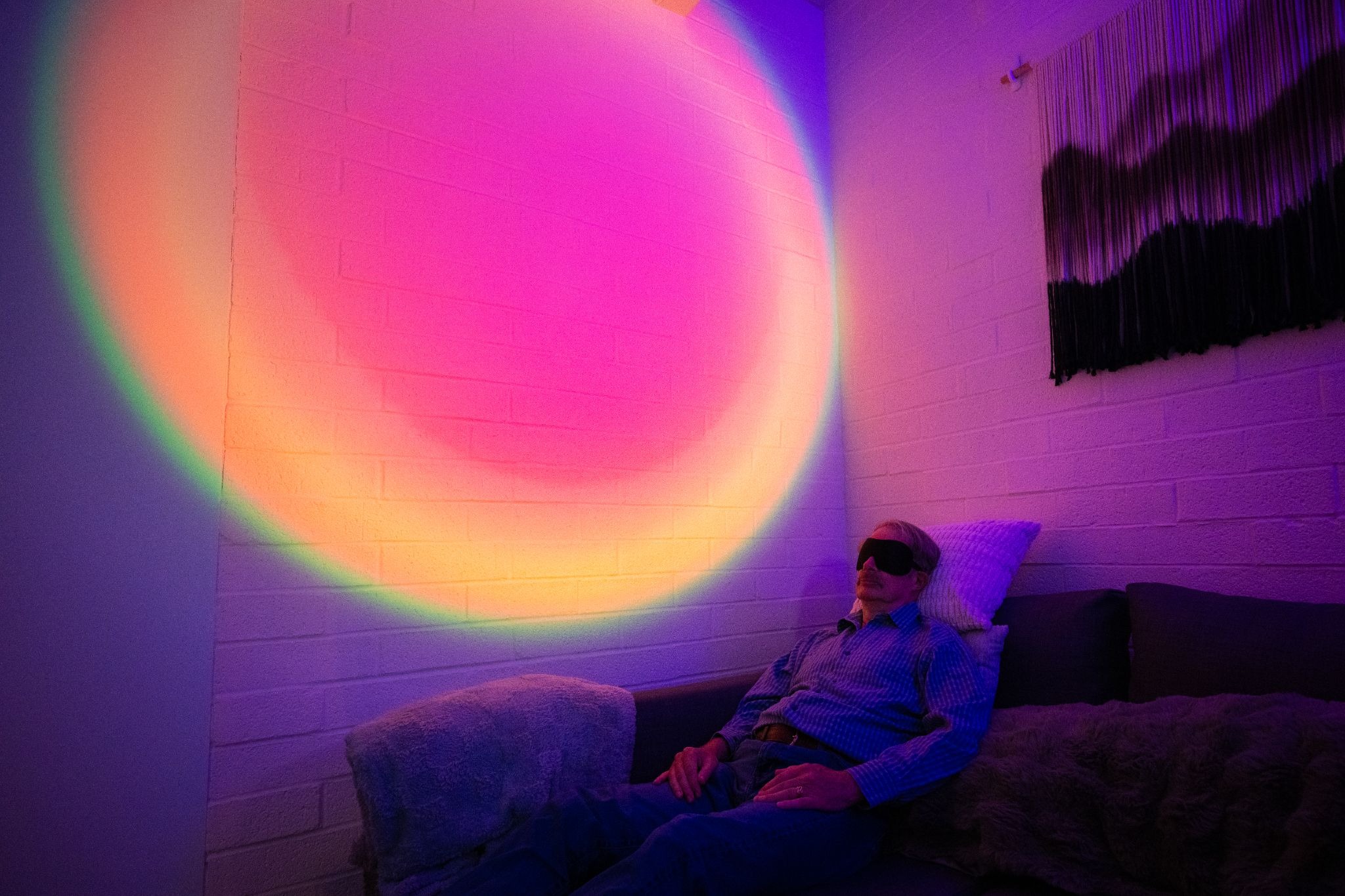
  • A man wearing an eye mask reclines on a couch in a darkened room. Behind him, the wall is illuminated with a circular, rainbow-colored light
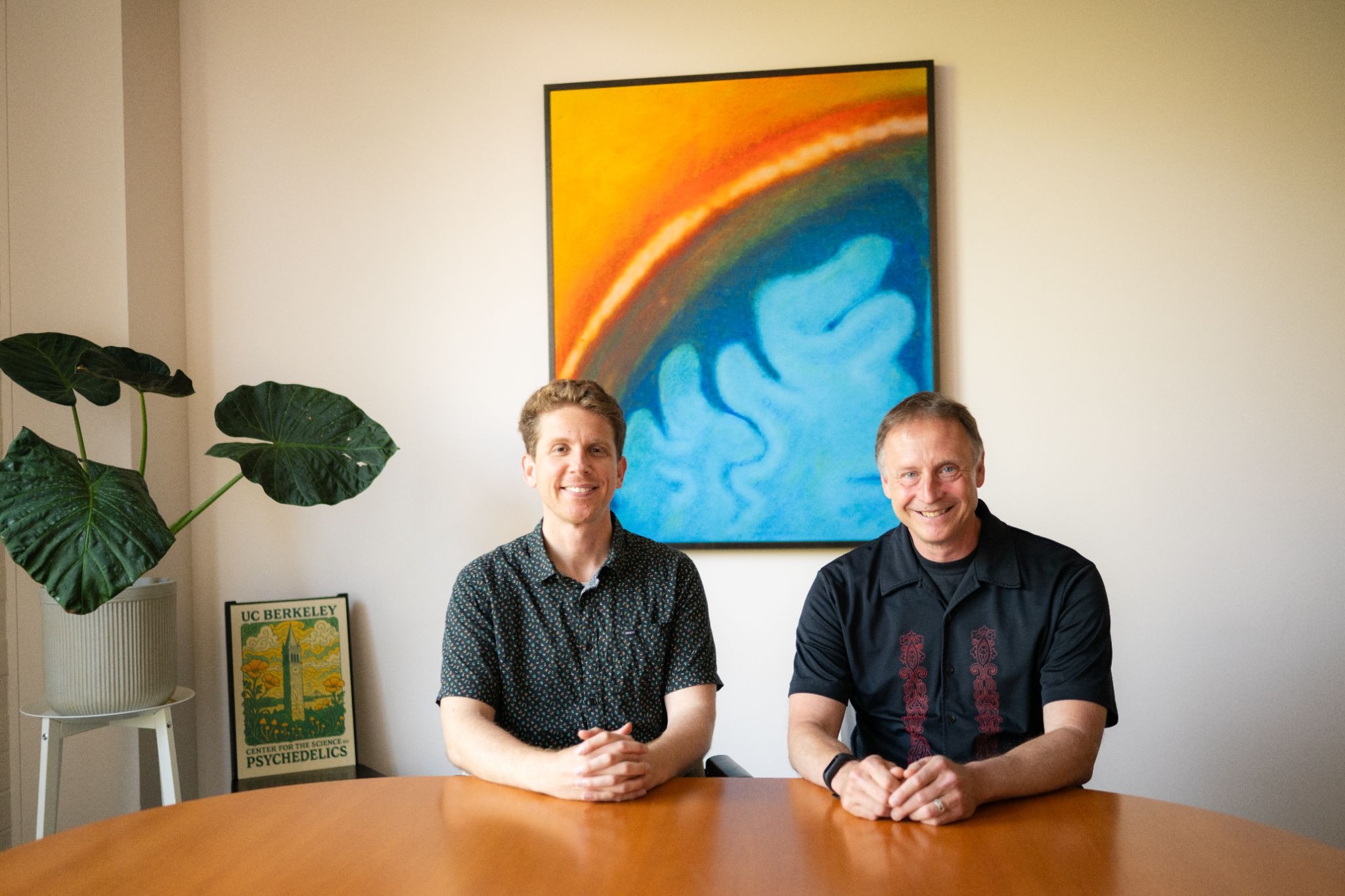
  • Two people sit at a table smiling at the camera. Behind them is a painting with blue swirls that are reminiscent of brain matter.
  • Two people sit across from one another in a brightly lit room that is furnished with a comfortable couch and chair and colorful art on the wall.

Can psychedelics help our minds and brains stay healthy as we grow older?

That’s the question posed by a new first-of-its-kind study launched earlier this year at the UC Berkeley Center for the Science of Psychedelics

The study, known as PLASTICITY (Psychedelic Longitudinal Aging Study In Cognitively Healthy Older Adults), is the first psychedelic neuroimaging study specifically focused on healthy older adults. The study will use MRI and other measures to investigate how psilocybin impacts memory, perception, emotion, and brain structure and function in healthy adults between the ages of 60 and 85.

The researchers will test whether psychedelics can enhance neuroplasticity in the brains of healthy older adults, help them regulate their emotions, feel more socially connected, and experience a sense of awe. Previous work has shown that psychedelics can reduce negative mental states like depression, anxiety, stress and rumination, and that these negative mental states may be linked with accelerated aging, said Tyler Toueg, a UC Berkeley doctoral student in neuroscience who co-led the project’s design.

“There’s a lot of overlap between the mental states that psychedelics influence and those associated with successful aging,” Toueg said.

As populations age worldwide, cognitive decline and neurodegenerative diseases such as Alzheimer’s disease are becoming increasingly common, with significant consequences for individuals, families, and health care systems. Given this demographic shift and the rising burden of neurodegenerative disease, there is an urgent need for new strategies to promote successful aging. 

Previous studies in non-human animals have shown that psilocybin increases the number of synaptic connections in the hippocampus and the prefrontal cortex of the brain. If psilocybin has the same effect on the human brain, it could help counteract the structural brain changes associated with aging. 

“One of the things that I am most interested in is seeing whether we can actually measure those potentially beneficial brain changes in older adults,” Toueg said.

While thousands of people have received psilocybin in controlled research settings over the past several decades, older adults have been largely absent from modern psychedelics studies. A 2024 review found that older adults represented only about 1.4% of all participants.

“Older adults have been almost entirely excluded from modern psychedelics research, yet they may stand to benefit significantly from compounds that promote brain plasticity,” said Michael Silver, a professor of optometry and vision science and neuroscience and the faculty director of the Berkeley Center for the Science of Psychedelics. “This study allows us to directly test whether the promising findings from animal models translate to older humans and to generate data that will inform future research on aging, cognition, and mental health.”

In the study, participants will take 1-30 mg of synthetic psilocybin, a compound found in psychedelic mushrooms. The researchers will collect a baseline assessment before each participant’s psychedelic experience. Then, they’ll repeat the assessment one week and one month after the experience to look for changes. 

The assessments will include cognitive, perceptual, and emotion testing, as well as advanced brain imaging. The imaging includes diffusion MRI to measure the microstructure of the hippocampus — a part of the brain involved with memory and learning — and functional MRI to examine brain activity during memory encoding and retrieval. Participants will also undergo measures of visual perception and will complete surveys examining how subjective aspects of the experience relate to longer-term changes in well-being. 

The study will also assess whether psilocybin can lead to sustained increases in vagus nerve activity when participants are experiencing positive emotions, like awe. Because vagus nerve activity is associated with better recovery from stress, it is a possible mechanism that could explain how psilocybin is related to mental health.

“One of the wonderful aspects of doing a study like this at UC Berkeley is that we are able to work with a broad array of experts — including emotion scientists and people who are experts in cognition and aging — to simultaneously study many facets of the enduring effects of the psychedelic experience,” Silver said. 

The interdisciplinary project was designed by Toueg, a Ph.D. candidate in the neuroscience graduate program at Berkeley, along with faculty spanning neuroscience, psychology, and psychiatry: Silver, a leading neuroscientist in the study of the human visual system in the brain; William Jagust, a prominent neuroscientist studying brain aging and Alzheimer’s disease; Dacher Keltner, a renowned psychologist on emotion, awe and well-being; and Brian Anderson, a psychiatrist at both UCSF and Berkeley’s psychedelics center, who is also acting as the medical director for the study.

If you would like to learn more about potentially being a research participant in BCSP neuroscience studies of human subjects, please email BCSPresearchsubjects@berkeley.edu.

Related stories:

Psychedelics change how we see the world. A UC Berkeley study aims to find out why.

Five takeaways from UC Berkeley’s new survey on psychedelics in society

For new professor, psychedelics and octopuses may hold keys to the human mind

PLASTICITY Study Launches to Explore Psilocybin and Healthy Aging

Two people sit at a table smiling at the camera. Behind them is a painting with blue swirls that are reminiscent of brain matter.
Photo of BCSP's Tyler Toueg and Michael Silver in front of art
Two of the PLASTICITY study designers: PhD candidate Tyler Toueg (left) and Michael Silver (right). Credit: Brandon Sánchez Mejia/UC Berkeley

BERKELEY, CA  — Researchers at the UC Berkeley Center for the Science of Psychedelics (BCSP) have begun enrolling participants in a new study investigating how psilocybin may affect memory, perception, emotion, and brain structure and function in healthy older adults.

The study, known as PLASTICITY (Psychedelic Longitudinal Aging Study In Cognitively Healthy Older Adults), dosed its first participant this year, marking a milestone in research on aging and neuroplasticity. The experiments in this study address a significant gap: while thousands of people have received psilocybin in controlled research settings over the past several decades, older adults have been largely absent from modern psychedelic studies, representing less than 1.4% of all participants.

As populations age worldwide, cognitive decline and neurodegenerative diseases such as Alzheimer’s disease are becoming increasingly common, with significant consequences for individuals, families and health care systems. Given this demographic shift and the rising burden of neurodegenerative disease, there is an urgent need for new strategies to promote successful aging. This study examines whether psilocybin could serve as one such strategy.

This study explores whether psilocybin, a compound known to influence brain plasticity, may offer a new avenue to promote healthy aging.

The interdisciplinary project was designed by Tyler Toueg, a Ph.D. candidate in the neuroscience graduate program at UC Berkeley, along with UC Berkeley faculty spanning neuroscience and psychology: Michael Silver, a leading neuroscientist in the study of psychedelics; William Jagust, a prominent neuroscientist studying brain aging and Alzheimer’s disease; Dacher Keltner, renowned psychologist on emotion, awe and well-being; and Brian Anderson, a psychiatrist at both UCSF and the BCSP, who is also acting as the medical director for the study.

Researchers will administer between 1 – 30 mg synthetic psilocybin and assess outcomes over the following two months. The experimental methods are cognitive, perceptual, and emotion testing and advanced brain imaging, including diffusion MRI to measure hippocampal microstructure and functional MRI to examine brain activity during memory encoding and retrieval. Participants will also undergo measures of visual perception and will complete surveys examining how subjective aspects of the experience relate to longer-term changes in well-being.

Previous research in animals suggests that psilocybin has shown to increase the number of synaptic connections in the hippocampus, which could theoretically counteract neural changes associated with aging. This study will be among the first to directly examine whether psychedelics may counteract these changes in healthy older adults.

“Older adults have been almost entirely excluded from modern psychedelic research, yet they may stand to benefit significantly from compounds that promote brain plasticity,” says Silver, a professor of optometry and vision science and neuroscience and the faculty director of the BCSP. “This study allows us to directly test whether the promising findings from animal models translate to older humans and to generate data that will inform future research on aging, cognition, and mental health.”

By integrating cognitive, perceptual, emotional, and biological measures, the study aims to generate foundational data on how a single psychedelic experience may influence brain structure and function and processes related to aging.

Media Contact

Rana Freedman
Executive Director of Communications
bcspmedia@berkeley.edu, (510) 664-5938

About the UC Berkeley Center for the Science of Psychedelics

The UC Berkeley Center for the Science of Psychedelics (BCSP) is an academic research center dedicated to the advancement of psychedelic discovery for the public good. The BCSP serves as a leading trusted source for scientific and interdisciplinary inquiry through rigorous scientific research, balanced journalism, accessible public education and reciprocal community engagement. The BCSP envisions a world in which progress in psychedelic research, public education, policy and practice lead to improvements in health and well-being. The BCSP is guided by the values and principles of acting with integrity and transparency, conducting rigorous research, serving as responsible stewards of public resources, embodying equity and reciprocity, and approaching the work with curiosity. For more information, visit psychedelics.berkeley.edu

Can Psilocybin Promote Successful Aging?

A man wearing an eye mask reclines on a couch in a darkened room. Behind him, the wall is illuminated with a circular, rainbow-colored light
An older man reclines on a couch with an eye mask on. There is an array of light on the way next to him: purple, yellow, pink and green.
The study on psychedelics and aging is administered at the BCSP lab in Berkeley. Credit: Brandon Sánchez Mejia/UC Berkeley

As more humans live longer, there’s a growing focus on aging well. In a new study at the BCSP, scientists are researching a promising potential use of psilocybin: to promote successful aging of healthy older adults.

We caught up with Tyler Toueg, a Ph.D. candidate in the neuroscience graduate program at UC Berkeley, and Michael Silver, neuroscientist and director of the BCSP, in a Q&A about psilocybin’s possible benefits for older adults, the brain mechanisms underlying cognitive decline, and how this study could open up further possibilities for psychedelics research.


Tell us about the aims of the BCSP’s PLASTICITY (Psychedelic Longitudinal Aging Study In Cognitively Healthy Older Adults) study. 

There are many things that we’re testing in the study, but one of the most meaningful is seeing whether we can demonstrate changes in structural plasticity in the brain that could be helpful for older adults. We know that with age, we lose synaptic connections, especially in certain brain regions like the hippocampus and prefrontal cortex. It’s been shown in animal models that psychedelics increase the number of synaptic connections in these regions, so we’re using MRI to assess structural change after giving psilocybin to our participants. 

The other aim I’m particularly interested in is that there are a variety of different behaviors that are associated with either more successful or worse aging. Things like depression, anxiety, stress and rumination are all associated with worse aging outcomes. Things like having purpose in life, emotional regulation, and awe are all associated with more successful aging. From what we’ve seen in other psychedelic studies that were not focused on older adults, psychedelics tend to promote changes in outcomes  that have been associated with successful aging, and reduce outcomes that have been associated with worse aging. In this study, we’re interested in seeing if there is evidence of these changes in older adults one month after taking psilocybin. 

Why do changes in structural plasticity matter as we age?

There are declines in structural plasticity associated with aging, which can represent a reduction in function and ability. There’s evidence that psychedelics cause structural brain changes in the opposite direction of those that often occur with aging. 

Why is it meaningful to study psychedelics and older adults?

One of the reasons is that we don’t have a lot of tools available to help promote “successful aging.” Before coming to Berkeley, I studied the characterization of risk for Alzheimer’s disease, and I realized that even if we could predict a person’s trajectory earlier and more accurately than we are currently able to, what we could offer people often wouldn’t really change.  The general advice  would be to exercise, sleep, eat healthy, and engage in social connection. The tools around promoting successful aging are really under-explored. 

It’s also worth mentioning that older subjects are extremely underrepresented in psychedelics research. Of those that have participated in psychedelics trials, less than 1.4 percent are in the age range we’re studying. 

Yeah, we’re actually the first to do a psychedelic neuroimaging study in healthy older adults. 

This study is multidisciplinary, involving researchers across departments. Can you share more about how it came together?

In this study, we’re able to uniquely play to our strengths at UC Berkeley by working together with Dr. Dacher Keltner and Dr. Bill Jagust and the members of their labs. Berkeley has outstanding basic mechanistic research in both neuroscience and psychology. Within that area, Dacher’s work has been very influential in questioning the deficit model of well-being, where we wait for something to break, as opposed to promoting proactive approaches to human health and flourishing. Bill is one of the leading authorities in the world on aging and its biological mechanisms. Tyler brought us together to design the basic structure of the PLASTICITY study. 

How does this study contribute to the broader field of psychedelics research?

Until recently, there had been almost no legal research with psychedelics in human subjects for nearly fifty years, which is really unprecedented. Even for very controversial topics like gun control or poverty research, the research has continued in some form at traditional research institutions, but that wasn’t the case for psychedelics for decades.

During the time when there was a desert of research in psychedelics, neuroscience advanced tremendously, and we now have these incredible tools for noninvasively measuring structural and functional changes in the brain. Normally, such scientific advances would go hand-in-hand with the research on a topic like psychedelics, but we have this real mismatch, with many fundamental questions about the effects and actions of psychedelics that have yet to be addressed.

Much of the resurgence of psychedelics research has been focused on development of new therapies for FDA approval for mental health treatments, so the studies have been on safety or efficacy of a particular treatment for a particular disorder. For that kind of work, you don’t necessarily need to understand the brain mechanisms; you just need to assess if it works and if it’s safe enough.

At the BCSP, we’re conducting some of the missing basic science research. We’re fortunate to have philanthropist funders who are interested in these basic questions, who see psychedelics as tools for deepening our understanding of the mind and brain and consciousness. It’s important for our work that our research subjects aren’t patients; we’re not treating them for a disorder. We are conducting foundational research which will provide important information for developing more precise and effective therapies.

Where are you in the study now?

We started enrollment last November and we now have two subjects that have gone through all the study visits, so we have two full data sets. Recruitment is ongoing, and our goal is to have twenty subjects dosed by the end of 2026. 

This study has the potential to have wide-ranging implications for psychedelic science. What possible findings excite each of you the most?

What really excites me is that we’re focused on healthy older adults. Most clinical trials with older adults are focused on people who already have a diagnosis. We’re asking whether we can actually promote positive outcomes in older adults who are healthy. It has been exciting to see emerging interest in the potential of psychedelics to promote successful aging, and I’m thrilled to be part of one of the first studies to explore this. I think that no matter what we find, this study will have implications for how we think about intervening in the aging brain.

I’m most excited by the basic science possibilities. We have so much to learn about the relationships among the mind and brain and consciousness, and at this time, we don’t even know what the form of the answers is going to look like. In the type of pharmacology research that we are doing, we know what the drug is chemically, and we know the types of neurotransmitter receptors it interacts with, but we don’t know how this leads to psychedelic experiences and long-term changes to the brain. I’m very interested in psilocybin as a potential mental health treatment, but I’m also interested in it as a way to shed light on these central mysteries in neuroscience and psychology. 

This interview was edited for length and clarity.

The Berkeley Center for the Science of Psychedelics is recruiting older adult participants for an experiment studying the effects of psilocybin on neuroplasticity. Participants will be asked to take a 1-30 mg dose of psilocybin and undergo 3 MRI sessions (1 week before psilocybin, 1 week after psilocybin, and 1 month after psilocybin). There will be 5 in person visits and 6 remote visits (approximately 40 hours over 3 months). Participants will be compensated at a rate of $15/hour, with a cap of $550. The study will take place partially remote and partially in person at the Brain Imaging Center and at the UC Berkeley Center for the Science of Psychedelics, Telegraph office. 

Eligibility: 

1. Healthy participants 

2. Must be 60 – 85 years of age  

To participate or learn more, please contact BCSP Research Staff at (415) 874-1308 or BCSPresearchsubjects@berkeley.edu.

A Neuroscientist Describes Your Brain on Psychedelics in 101 Seconds

Michael Silver mid-conversation, with an inset image of mushrooms

Berkeley, CA – May 4, 2026

Written by Kara Manke and Charlotte Khadra for UC Berkeley News

Michael Silver wants to know what your brain looks like on psychedelics. 

From Timothy Leary to Michael Pollan, countless psychologists, journalists and cultural leaders have documented the profound impact psychedelics can have on the human mind. And long before these substances became popularized in Western society, psychoactive plants were a key component in many Indigenous healing practices.

But underneath these mental states is a physical organ — the brain — composed of a tangled web of neurons and other cells that somehow work together to create these transformative experiences. As Silver explains in this 101 in 101 video, scientists still know very little about what exactly is happening inside the brains of people on psychedelics. 

As the director of the BCSP, Silver is leading a team of researchers who are using brain imaging to uncover the “nuts and bolts” of how psychedelics work in the brain.

By collecting “movies” of the brain activity of people on psychedelics, they hope to link changes in brain activity with changes in perception. This detailed, mechanistic understanding of psychedelics and the brain could not only transform how we understand the human mind and consciousness — it could also lead to new and possibly more effective treatments for mental illness. 

“A psychedelic experience in the right therapeutic context can result in enduring, maybe permanent changes in people… there have been studies in the lab environment where the majority of people rated it as one of the most profound and sometimes spiritually meaningful experiences of their lives,” said Silver, a professor of optometry and vision science and of neuroscience at Berkeley. “We believe that this kind of information will eventually be critical for improving well-being in society and reducing suffering.”

Watch more 101 in 101 videos featuring UC Berkeley faculty and experts here.

UC Berkeley Center for the Science of Psychedelics Unveils Results of the First-Ever Berkeley Psychedelics Survey

graphic about support for regulated therapeutic use of psychedelics

More than six in ten (61%) American registered voters support legalizing regulated therapeutic access to psychedelics, including 35% who report “strong” support, the inaugural UC Berkeley Psychedelics Survey has found. 

Over half of voters (56%) polled support obtaining FDA approval for psychedelics by prescription. In addition, more than three-quarters of voters (78%) support making it easier for researchers to study psychedelic substances.

Almost half (49%) support removing criminal penalties for personal use and possession with support for spiritual and religious use polling at just over four out of ten (44%).

The majority of American voters support policy reforms for psychedelics, the survey revealed. The new national poll, launched by theUC Berkeley Center for the Science of Psychedelics (BCSP) found thatalmost seven out of ten (69%) voters support at least two of the policy reforms tested. 

However, despite the high levels of support for policy changes, 61% of voters also said they do not perceive psychedelics as “good for society” and 69% do not perceive them as “something for people like me.” The data suggests voters are open to policy change but also have significant reservations.

graphics about those who support psychedelics policy change but also hold negative perceptions

Awareness and use of psychedelics are widespread and appear to predict voter sentiment. 47% of voters have heard something about psychedelics recently and over half (51%) reported a ‘first-degree’ connection to psychedelic use – that either they, or someone close to them, has used a psychedelic.

Respondents with awareness and a first-degree connection to psychedelics are also more likely to support policy reforms, have positive perceptions of psychedelics, and trust in almost all sources of psychedelics information (with the exception of law enforcement). With the exception of research expansion, no psychedelic policy reform is majority-supported by voters who have no first-degree connection to use.

chart about support for policy reform mapped by 'first-degree connection' to use

The polling data also illustrated that awareness and first-degree connection to psychedelics are demographically uneven, with African-American and Latino communities most notably underrepresented. 

Additional key data from the survey includes:

  • 47% of voters have heard something about psychedelics recently, with 48% of those saying that they have heard about psychedelics’ use for mental health treatments. 
  • African Americans are the racial/ethnic group least likely to have heard something about psychedelics recently (29%) and also have a much lower first-degree connection to psychedelics use (26%) than other groups.
  • Liberal voter support for legalized therapeutic access to psychedelics is 80%, compared to moderates at 66% and conservatives at 45%.
  • Nearly half of voters (47%) who support therapeutic access to psychedelics also believe psychedelics are not “good for society”.
  • The majority of voters are comfortable with psychedelic therapy being used to treat those suffering from terminal illnesses (80%), veterans (69%), and people suffering from treatment resistant depression and anxiety (67%). Notably fewer are comfortable with open access to psychedelic therapy for anyone over the age of 21 (44%), or the use of psychedelic therapy to treat addiction (45%)
  • While large majorities say they would trust information about psychedelics coming from nurses (75%), scientific researchers (74%), doctors (74%), and psychiatrists (70%), trust in the FDA as an information source is more split, with only 56% considering it “very” or “somewhat trustworthy,” 17% considering it “somewhat suspicious” and 22% considering it “very suspicious.” 

The polling results and insights from the UC Berkeley Psychedelics poll were presented at a dedicated briefing with Best-selling author of ‘How to Change Your Mind’ and BCSP Co-Founder Michael Pollan, BCSP Executive Director, Imran Khan, and, Project Lead, Taylor West

The UC Berkeley Psychedelics Survey provides information vital to understanding where the public stands on psychedelics right now. This is critical for anyone working in the psychedelic field,” Michael Pollan said. “Nuanced debate in media, policy reforms and public education programs will be most effective when informed by data-driven insights rather than assumption and conducted in thoughtful response to the hopes, fears, and perceptions held by different communities across the US.”

The poll is an important milestone for the BCSP’s public education program and for establishing longitudinal analysis of public opinion about psychedelics over time. “Amidst competing narratives of psychedelic stigma and hype, it’s vital that we have clear information about what the public really thinks and believes about psychedelics. Our data shows that people are hearing about the research, and support more science – but also that some communities are being left out of an important public conversation,” Imran Khan said.

“At the BCSP our mission is to support the burgeoning field of psychedelics with vital evidence and trustworthy data and the UC Berkeley Psychedelics Survey provides this much-needed information for policy, business, media and research now and in the future”, Khan concluded.

“This inaugural survey shows voters in the U.S. are open to significant changes in policy related to psychedelic access, even as they hold personal reservations about the role of those compounds in our society, “ said Taylor West. “That’s a nuance in public attitudes about psychedelics that anyone working in the field needs to pay attention to.”

View the UC Berkeley Psychedelics Survey Deck 

Download the survey results document 

Download the survey crosstabs 

The BCSP is grateful to Blake Mycoskie for his philanthropic support of this first edition of the UC Berkeley Psychedelics Survey. The Center is now looking for support for future iterations of the project, including so we can start to identify trends in multi-year data; please get in touch if you’re able to support this important quantitative work.

>